
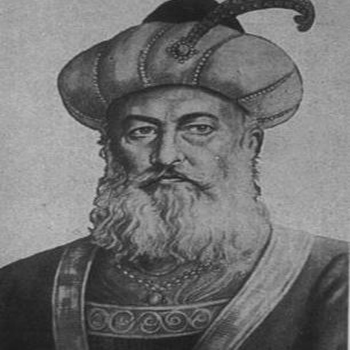
One of the tribes that keeps reappearing in my studies of Punjab are the Khokhars. Previously, I have written posts on Jasrath Khokhar and his exploits, how the Khokhars played an essential role in Kashmir’s politics by bringing Sultan Zain-ul-Abidin to power over there. The grit of Khokhars is such that Nusrat Khokhar, a zamindar attempted to resist Timur with just 2000 of his tribesmen by Timur’s own account in Malfuzat Timury. Today, though I will explore the theory around Sultan Shahab-ud-Din Ghori’s death for whom Khokhars are held responsible.
During Sultan Ghori’s campaign in Ghazni the Khokhars and other Punjabi tribes of Koh-i-Jud hills (Salt Range, Potohar) had broken out in revolt. Then in winter “the Sultan came in to Hindustan and sent that refractory race to hell and carried on holy war as prescribed by the canons of Islam” [1] according to Tabaqat-i-Nasiri.
The issues between Khokhars and Ghurids go back to the time of Ghaznavids, when the last Sultan of that empire, Sultan Malik Khusrau allied with the tribe by encouraging them to stop paying tribute to their masters in Jammu and in case of retaliation offering them assistance. This alliance prolonged the inevitable demise of Ghaznavids and as the story goes, they were eventually swallowed by the Ghurids when Sultan Shahab unable to take Lahore by force treacherously arrested Sultan Khusrau after inviting him for negotiations and later put him to death.
After subduing the Salt Range and particularly the Khokhars, Sultan Ghori returned to Ghazni, but “in the year 602 Hijri at the halting place of Dam-yak he attained martyrdom at the hand of a disciple of Mulahidah and died” [2] The place Damyak is supposedly somewhere west of Jhelum.
Wassaf (1265-1328) or Abdallah ibn Faḍlallah Sharaf al-Din Shirazi was a Persian court historian for the Ilkhanate (Mongols) who writes on the event in his Tazjiyat-ul-Amsar wa Tajriyat ul Asar “When Sultan Ghiyasu-d din died, the government devolved alone upon Sultan Shahdbu-d din Ghori, who was slain by some Hindu devotees in the year 602 H. (1205 a.d.)” [3] Implying the perpetrators were Khokhars.
Jami al Tawarikh known as “the first world history” compiled also in the Mongol Ilkhanate in the 14th century states that it was Khokhars, but then contradicts itself by saying that Imam Fakhr ud Din who used to accompany Sultan Shahab ud Din on his campaigns was responsible. [4] but then there is also a theory that people tried to defame the Imam to hide their own hand in this matter.
Tarikh i Alfi was a work commissioned by Mughal Emperor Akbar meant to cover the first 1000 years of Islamic history also suggests that Khokhars who lost relatives in Ghori’s campaigns were behind this as “One man among them came upon a door keeper and wounded him on which the wounded man began to cry out. On this, the rest of the people about rushed up to the wounded man to see what was the matter, and were collected around him. The Khokhars seized this opportunity and succeeded in reaching the Sultan whom they dispatched with many severe wounds.” [5]
Ibn Al Athir (1160-1233) of the Tarikh-i-Kamil is perhaps the most reliable historian in this context in my humble and limited opinion. The reason being he was a contemporary who states “that when the assassins were secured two among them were found to be Muslims (circumcised)” [6] which indicates that the deed was a joint Qaramitian (Ismaili)-Khokhar affair.
Firishta (1560-1620) is said to have also cited Ibn Al Athir as well, but he makes the mistake of calling them Gakhars (tribe) as he does with Jasrath Khokhar as well. As for the reason behind the Ismaili theory (& hostility) was because Sultan Ghori captured Multan and ended their rule over there in 1175 who had re-established themselves after the Ghaznavid incursions.
Sources:
[1] Tabaqat-i-Nasiri (Raverty) pgs. 481-483
[2] Tabaqat-i-Nasiri (Raverty) pgs. 484-485
[3] Tazjiyat-ul-Amsar wa Tajriyat ul Asar, History of India told by its own Historian Vol 3, pg. 37
[4] Tabiqat-I-Nasiri (Raverty) pg. 486
[5] Tabiqat-I-Nasiri (Raverty) pg. 486
[6] The Foundation of Muslim Rule in India pg. 72 (footnote 108)

 Punjabi Waseb
As a general question: are Khokhars a clan of Jat, or a separate tribe altogether?
I have gotten mixed answers so far.
LikeLike