
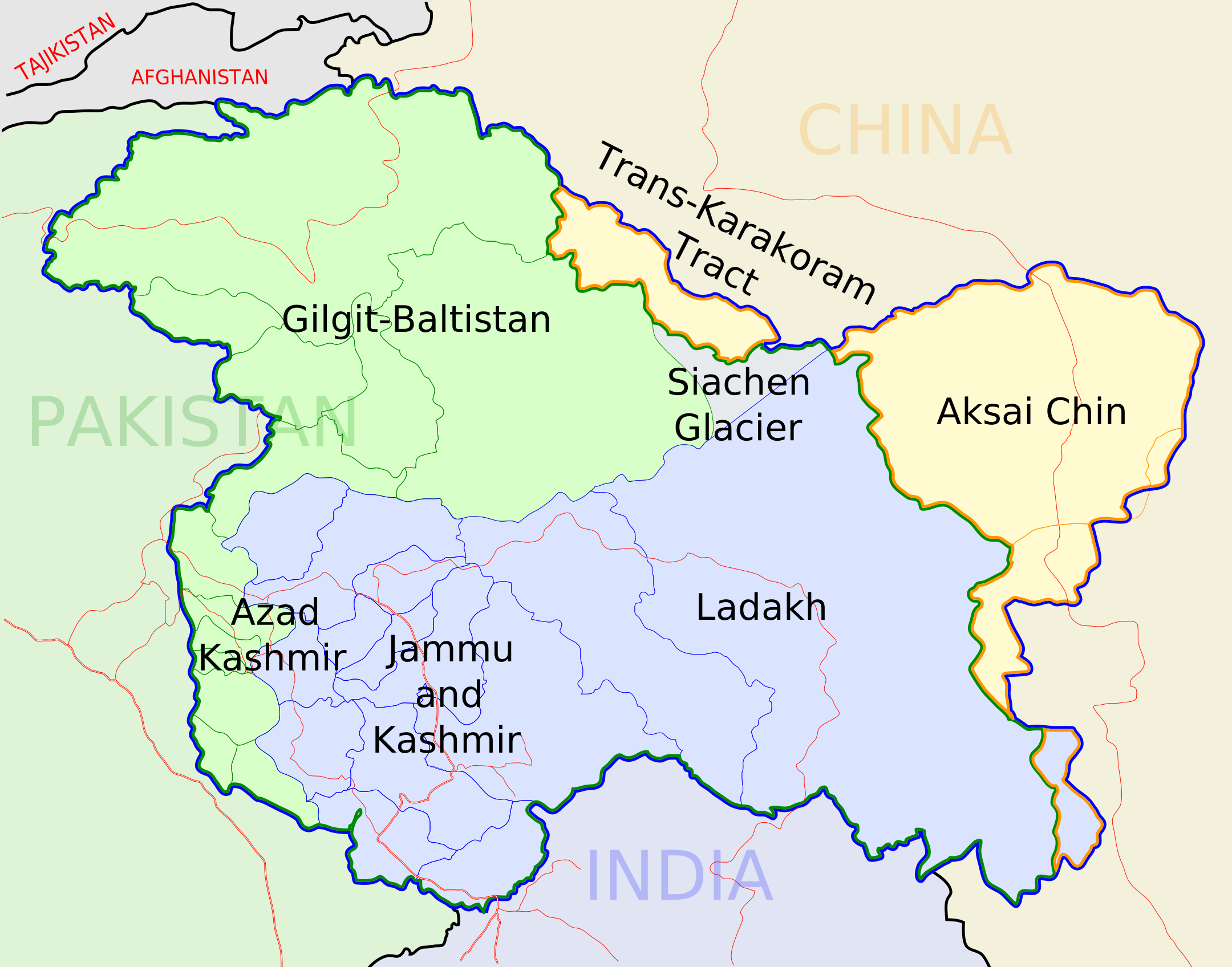
Source: Wikipedia
Born in 1395 Shahi Khan (later Zain-ul-Abidin) was the 8th Sultan of the Shah Mir Sultanate which reigned for over two centuries in Kashmir. Shahi Khan is left to take care of the Sultanate by his brother Sultan Ali Shah, who is on a trip to see his father in law in Jammu, but in his absence Shahi Khan proclaims himself as ruler. This action naturally does not go unnoticed & Sultan Ali Shah with the help of nearby Rajas of Kashmir reclaims the Sultanate.
The defeated Shahi Khan finds himself taking refuge in Sialkot, which is ruled by the Khokhar tribe now lead by the notorious Punjabi Muslim Jasrath Khokhar, who had recently escaped Timur’s prison in Samarqand. The details around the escape, however are not clear nor am I sure what kind of control did “Sayyids” rulers have over Khokhar domains if they had any to begin with at this point. Punjab itself along with Hindustan in general was under the reign of “Sayyid” dynasty as mentioned earlier, which had emerged as a vassal to Timur, the objective of which was to prevent any significant state formations on Timurid boundaries. The qaumiat of Sayyids remains a matter of mystery.
In the summer of 1420, Sultan Ali Shah who anticipated this assault takes on Jasrath Khokhar is decisively defeated and taken as a prisoner, perhaps executed as well according to Tarikh-i-Mubarik-Shahi whose author Yahya Bin Ahmad Sirhindi describes Jasrath as “Intoxicated with victory, and elated with the strength of his forces, he began to have visions about Dehli”. [2]. So, with the help of Jasrath Khokhar who acts as the kingmaker, Shahi Khan ascends the throne of Kashmir in 1420, which he then goes on to rule for FIFTY years as Sultan Zain-ul-Abidin.
This victory serves as the launching pad for a 20 year rebellion against the “Sayyid” dynasty, which is said to have been financed to a degree by Sultan Zain-ul-Abidin.
Sources:
[1] Lal, K. (1958). JASRAT KHOKHAR. Proceedings of the Indian History Congress, 21, 274-281. Retrieved August 16, 2021
[2] The History of India as Told by Its Own Historians The Muhammadan Period by Sir H.M. Elliot pg. 54

 Punjabi Waseb