
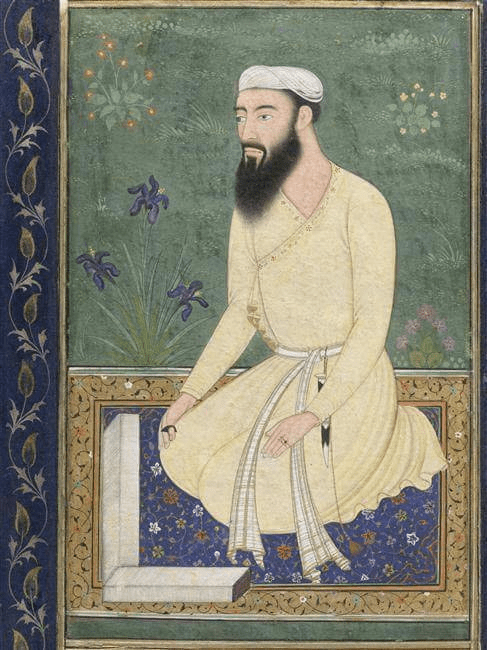
The Mughal nobility was overwhelmingly dominated by people of Central Asian backgrounds and the main court factions being Turks and Iranians (Persians). So, for a Hindustani to rise in the ranks of a regime of foreign extraction is a remarkable achievement. Shahbaz Khan Kamboh was just one such man to do so. Not only that he was a Punjabi Muslim.
While, the Kamboh settlements are not limited to Punjab, according to Punjabi District Gazetteers, Jullundher Part A, 1904 while talking about Kambohs it states “Muhammadan Kambohs are numerous in the Ambala District, and a member of this tribe Shahbaz Khan, attained the rank of commander of 5,000 men under Akbar, and distinguished himself as a general in Bengal and elsewhere.” So, naturally I turned my attention to the Punjab District Gazetteers, Ambala District 1883. While Ambala is in present day Haryana state, which was separated from Punjab based on Hindi language, the Gazetteer states “The language talked in this district is Punjabi” and according to an 1881 census cited in the Ambala Gazetteer for every 10,000 people, 9,985 were Punjabis to 13 Hindustanis & rest others. Of course things have changed considerably today.
The Glossary of the Tribes and Castes of the Punjab and North West Frontier Province also suggests that the Muslim Kambohs of Phillaur (Jalandhar) are related to the ones in Ambala as their Rajput status is linked to Shahbaz Khan Kamboh’s achievements. Shahbaz Khan himself as we later find out was a resident of Lahore.
Rajput Identity:
Going on a tangent, according to Indologist, Richard Eaton in his book “India in the Persianate Age: 1000-1765” being a Rajput was a fluid identity that a tribe may be able to aspire to by associating themselves with military service to whomever ruled Delhi. Of course these identities became crystallized later on.
So, what I take is contrary to popular belief being a Rajput is not some ancient identity where all the clans are descendants of the same few elders, but a social status linked to profession. It makes sense because for example the Janjuas, Khokhars and Kiyanis (Gakhar) tribes all claim to be Rajputs, but do not share origins.
As for social status, there are tribes that claim both Jatt & Rajput ancestry depending on where they are located in Punjab. The Manj tribe in East Punjab (Jalandhar) are Rajputs, because Isa Khan Manj was part of Mughal nobility towards 1700s, whereas Manj of West Punjab in Sargodha call themselves Jatt. Same applies to Kharals who claim both Jatt and Rajput status and many more. So, the Kamboh of Punjab or at least ones in Eastern Punjab raised themselves from a “cultivating class” to Rajput status via Shahbaz Khan Kamboh’s association with the Mughal nobility.
Essentially, the Rajput identity is also a product of Persianate cultural order in the region. The pages from Richard Eaton’s book which discuss the Rajput phenomenon in detail are cited below in references.
Administrator:
According to Ain-e-Akbari, Shahbaz Khan Kamboh’s sixth ancestor Haji Ismail was a disciple of Bahauddin Zakariya and according to Akbar’s court historian, Abd-al- Qadir Badayuni in Muntakhab-At-Tawarikh his real name is “Shahrullah Kambu”. The earliest mention of his career in the Mughal service starts out as a Kotwal, which then leads to promotion for higher ranks. Abu’l Fazl in Ain-e-Akbari describes “the excellent way in which he performed the duties of kotwal drew Akbar’s attention to him and he as made an Amir and appointed Mir Tozak”. Mir Tozak is a Quarter Master General.
In the 16th year of Akbar’s reign, his Mir Bakshi, Lashkar Khan fell out of favour and Shahbaz Khan would fill the spot. Muntakhab-At-Tawarikh again “To Shahrulla Kambu of Lahore he gave the title of Shahbaz Khan and appointed him Mir Bakshi”.
A Mir Bakhshi according to The Central Structure of the Mughal Empire in Northern India was a minister responsible for the Mughal army, but also enjoyed all the powers of the Divan-i-Arz (finance minister). The proximity to the Emperor meant his influence spanned well beyond his own office and added to its prestige. Recruitment, promotions, salary all came under Mir Bakhshi’s domain as well which put him on par with the Vakil or the Grand Wazir of the Empire. In fact the appointments of Vakil himself went through Mir Bakhshi’s office. The Divan could only proceed with entering formal records after Mir Bakhshi added his seal to the document.
“Thus his influence extended all departments of central government and he dealt with them on an equal footing”. The Mir Bakhshi was part of the Emperor’s inner circle, he would accompany him in the private chamber and attend all meetings.
As a Mir Bakhshi in Mughal Empire Shahbaz Khan Kamboh was responsible for reviving a practice used in Khilji and Suri era, called Dagh-o-Mahali, which in short was meant to reduce overhead & soldiers would be promoted or demoted based on merit. He also brought a branding system Dagh-o-Tasiha for horses to prevent fraud, which was not met with excitement.
In 1581, when Akbar marched out against Mirza Hakim in Punjab, Shahbaz Khan Kamboh was left behind to manage the empire’s affairs on the Emperor’s behalf which lasted ten months.
Military Career Highlights:
In the 21st year he would be sent out to put down a rebellion in Jodhpur (Rajasthan) against Rathore rebels. Then in the same year he is sent to Bihar against Raja Gajpati described in Ain-e-Akbari as “greatest zamindar in Bihar” who earlier distinguished himself in a Mughal Bengal campaign, but had turned a rebel. Upon return to the court after a successful campaign he “received every distinction due to his eminent services”.
Some of his other feats including submitting Rana Pratap of Rajasthan who unable to defend his Fort Kumbhalgarh would escape in disguise. Shahbaz Khan also distinguished himself for taking care of rebellions in Bengal.
Towards the end of his career and in Akbar’s 43rd year as Emperor, he would be sent to assist Prince Salim later Emperor Jahangir in Ajmer (Rajasthan) province.
Death:
While in Ajmer sometime during the year 1600 at the age of 70 he would pass away. The immense wealth left behind by the nobleman was utilized by the future Emperor Jahangir to execute his rebellion.
Shahbaz Khan Kamboh wished to be buried close to Muinuddin Chishti in Ajmer, however the guardians of the shrine refused this wish, hence he was buried outside. However, Ain-e-Akbari mentions the saint would appear in the dreams of one of the custodians expressing Shahbaz was his favourite, “whereupon the hero was buried inside, north of the dome”.
Conclusion:
Putting aside military & worldly achievements the aspect which stands out the most out of Shahbaz Khan’s life was his dedication to his faith. He was one of the two noblemen in Akbar’s court to have the backbone to stand up to the Emperor and not only refuse his Din-e-Elahi, but criticize him for it in front of everyone. “His Sunni zeal, no doubt retarded his promotion as much as his arrogance; for other less deserving officers held higher commands” writes Abu’l-Fazl in Ain-e-Akbari. He did not shave his beard nor did he add the word murid (of Akbar) to his seal to impress the Emperor. A man who observed his five prayers strictly and never seen without a tasbih.
Abu-al-Fazl again states that on one occasion Akbar would hold Shahbaz’s hand while on a walk and it would be time for Asr prayer & Shahbaz would ask to take leave to which Akbar would reply “Oh, you can pray another time and make amends for this omission”. Shahbaz Khan would withdraw his hand from the emperor, lay out his shawl to not only pray Farz but also Sunnat prayers. Emperor Akbar would continuously smack Shahbaz on the head telling him to stop and eventually Hakim Abul Fath, the court doctor would interfere on Shahbaz Khan’s behalf.
During his life every Thursday evening Shahbaz Khan would distribute, 100 Ashrafi in the memory of Shaikh Abdul Qadir Gilani.
References:
- Gazetteer of the Ambala District: 1883, pg 49
- Punjab District Gazetteer Jullundher District 1904, pg 92
- Ain-i-Akbar Vol 1, 399-402
- Glossary of the Tribes and Castes of the Punjab and North West Frontier Province, pg 443
- Muntakhab-at-Tawrikh Vol 2, pg 174
- India in the Persianate Age by Richard Eaton, pgs 128-140, 165 & 217-224
- Husain, A. (1983). THE LETTERS OF HAKIM ABUL FATEH GILANI—AN UNEXPLORED SOURCE OF AKBAR’S REIGN. Proceedings of the Indian History Congress, 44, 189-197. Retrieved November 14, 2020
- Akbar the Great Mogul by Vincent Arthur Smith, pg 301
- The Central Structure of the Mughal Empire in Northern India and its practical working up to the Year 1657 by Ibn Hasan, pgs 194-224

 Punjabi Waseb
[…] to time is compiling a list of Punjabi Muslims in Mughal Nobility. I also previously wrote about Shahbaz Khan Kamboh. However, recently I had the fortune of coming across another Punjabi Muslim standout who was in […]
LikeLike